
The Chapel Hill High School Experience
Preparing Students for College, Career, Calling, and Life Beyond Graduation
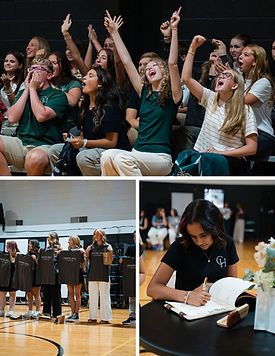
What makes the
High School experience
at Chapel Hill Christian Academy unique?
At Chapel Hill Christian Academy, we believe High School is about so much more than earning credits and preparing for graduation. Our desire is to provide a Christ-centered learning environment where students are known, challenged, encouraged, and equipped to grow academically, spiritually, and personally.
Through rigorous academics, intentional discipleship, meaningful relationships, leadership and service opportunities, athletics, fine arts, and personalized support, we strive to help students discover and develop their God-given gifts, become rooted in Biblical truth, and grow in their ability to lead and serve with purpose.
Ultimately, our heart is to prepare students not only for college and career, but for wherever the Lord calls them next.

What is special about being part of a growing High School?
As CHCA continues adding grade levels and preparing for its first graduating class in 2028, students have a unique opportunity to help shape the culture, traditions, and legacy of our High School.
Our students are not simply participating in an established High School experience. They are helping build it!
We are excited about the opportunities this provides for student leadership, meaningful involvement, and creating traditions that will impact future generations of CHCA Lions.
What is CHCA's ultimate goal for its High School graduates?
Our desire is for CHCA graduates to leave High School with a strong academic foundation, a growing relationship with Christ, confidence in their God-given gifts, and the character and skills needed to pursue their next steps with purpose.
Whether students are called to college, technical training, military service, entrepreneurship, or the workforce, we want them to be equipped to think critically, lead with integrity, serve others, and faithfully follow God's calling on their lives.


How is spiritual growth incorporated into the High School experience?
Spiritual formation is at the heart of the CHCA High School experience. Students participate in daily chapel, engage in Bible and Discipleship coursework, and are encouraged to develop a Biblical worldview that shapes how they think, learn, lead, and live.
Our teachers intentionally integrate Biblical truth throughout instruction and seek opportunities to disciple students through meaningful relationships, prayer, and everyday conversations.
We want students to graduate with more than academic knowledge. We want them to be grounded in God's Word and equipped to live out their faith wherever He leads them.
How does CHCA support students with different academic needs and abilities?
We recognize that students learn and grow in different ways. Our High School team works intentionally to provide academic support, encouragement, and opportunities for growth.
Through academic coaching, targeted interventions, ROAR support time, small class size, and meaningful teacher-student relationships, we seek to help students develop confidence, independence, and ownership of their learning.
Our desire is for every student to be appropriately challenged and supported as they work toward their individual goals.
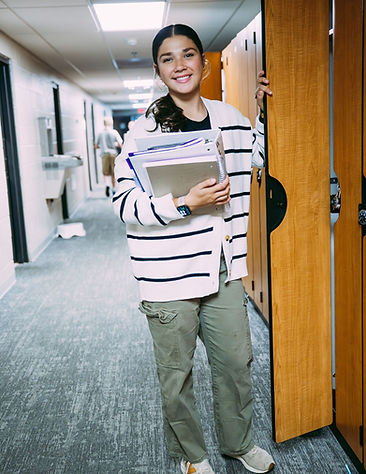

What leadership and service opportunities are available to High School students?
CHCA students have opportunities to grow as leaders and serve others through our Lion Ambassadors Student Government Association (SGA), National Art Honor Society (NAHS), Fellowship of Christian Athletes (FCA), Senior Beta Club, Key Club, and additional student-led initiatives.
Through school leadership, community service, and ministry opportunities, students are encouraged to take initiative, develop responsibility, and recognize the impact they can make in the lives of others.
What opportunities are available for students to pursue interests outside of academics?
We believe students benefit from opportunities to discover and develop their God-given gifts beyond the traditional classroom.
Through athletics, fine arts, drama, music, clubs, and extracurricular activities, students can pursue their interests, build friendships, develop leadership skills, and contribute to our growing High School community.
What opportunities are available for students to explore college and career interests?
Through our CALLED College & Career initiatives, students have opportunities to explore post-secondary options, learn about different career fields, and begin considering how their interests, abilities, and God-given gifts may connect with their future calling.
We are also developing an Externship Program designed to connect students with professionals and workplaces, providing opportunities for meaningful career exploration and real-world learning.
Does CHCA prepare students for pathways other than a traditional four-year college?
Yes! We recognize that God has uniquely gifted each student with different strengths, interests, and callings. While we offer college-preparatory coursework, Honors courses, and Dual Enrollment opportunities, we also value helping students explore a variety of post-secondary pathways, including technical and trade schools, military service, entrepreneurship, and career opportunities.
Our goal is to help students discover their strengths, develop essential skills, and make informed decisions about their futures.
What academic opportunities are available beyond Dual Enrollment?
CHCA offers a college-preparatory academic program designed to challenge students and build a strong foundation for their futures.
Students have opportunities to pursue Honors English coursework, develop their skills through a variety of core academic courses, and explore interests through offerings such as Agriscience, Media Arts, and Computer Science.
Across all courses, we emphasize critical thinking, communication, problem-solving, and the development of strong academic habits that will serve students in any future pathway.

Called: Preparing Students for College, Career, and Calling
How does CHCA prepare high school students for life after high school?
We believe each student is uniquely gifted and called by God, as reflected in 1 Corinthians 12:4–6 and Romans 12:6–8. As a school, our heart is that all students will leave the doors of Chapel Hill knowing how deeply they are loved by the Lord and prepared to do the work He has called them to. This could look like pursing additional education, entering the workforce, going into full-time missions or joining the military. The high school scope and sequence is designed to equip all students with skills needed after high school, regardless of what their next step looks like.
All high school students are eligible for individual academic planning, college and career advising, testing and preparation opportunities, Called Week and dual enrollment options.
Bible for Seniors will be called “Commissioned,” coming from Matthew 28: 16-20. This course will focus on three key themes from these verses: Jesus has all authority; what does it look like to “go” and fulfill the Great Commission; the promise - He is with you always. Students will have intentional discipleship, spend time in the Word and “go” into the community to serve.
Our heart behind Commissioned is that students will leave Chapel Hill understanding that graduation is not the end of their discipleship journey, but the beginning of a new season of living out their faith. Wherever the Lord calls them next, we want them to go with a strong foundation in His Word, a heart ready to serve, and the confidence that they are never going alone.
The purpose of Called is to help every senior leave Chapel Hill feeling prepared, confident, and equipped to take their next steps, wherever the Lord leads them.
Through Called class, seniors will have intentional time built into their schedules to prepare for life beyond High School. This dedicated time will allow students to focus on their individual next steps, whether that includes college, trade or technical school, military service, or entering the workforce.
Students will participate in meaningful learning experiences focused on essential life skills, including financial literacy, professional skills, adult responsibilities, personal responsibility, and Biblical decision-making. Called will also provide individualized time for students to work toward their specific postsecondary goals, whether that means navigating college admissions, exploring scholarship and financial aid opportunities, developing resumes, writing application essays, preparing for interviews, or researching career and training opportunities.
Called will also provide flexibility for the many milestones and responsibilities that come with senior year, including graduation planning, important deadlines, and other senior-specific activities. By setting aside dedicated time for these experiences, we can intentionally support students through this exciting season of transition while protecting valuable instructional time in their core academic classes.
At Chapel Hill Christian Academy, we believe preparing students for life beyond High School means providing meaningful opportunities to explore their God-given gifts, discover their interests, and gain firsthand experience in career fields they may feel called to pursue.
Through our High School Externship Program, students will have the opportunity to partner with local businesses, organizations, and professionals throughout the Chapel Hill and Clarksville communities. Students will travel off campus during designated school hours to learn alongside a professional mentor, gaining valuable insight into the daily responsibilities, skills, challenges, and opportunities within a career field of interest.
Throughout the semester, students will also participate in designated on-campus learning and reflection days. These experiences will provide opportunities to process what they are learning, make connections between their classroom education and real-world experiences, develop professional skills, and consider how their interests and abilities align with their future goals.
The program will be offered in two semester-long blocks, allowing students the flexibility to participate in one externship, explore two different career fields, continue with the same mentor for an entire school year, or combine an externship experience with Dual Enrollment coursework if they choose.
Our desire is to equip students not only to make informed decisions about their future, but also to develop the character, confidence, skills, and servant-hearted leadership needed to pursue wherever God calls them next.
Commissioned
Called
Externship
Dual
Enrollment
At CHCA, preparing students for life beyond high school includes opportunities to grow academically and take meaningful steps toward their future. Dual enrollment allows eligible students to take college courses before graduation while remaining enrolled at CHCA.
What is dual enrollment, and what could it mean for my student?
Dual enrollment gives eligible high school students the opportunity to take college courses before graduating from high school. Students remain enrolled at CHCA while also enrolling in a college. Approved courses can earn college credit and CHCA high school elective credit at the same time.
For example, a student might take an introductory course in a field they are interested in exploring. The college instructor provides assignments, deadlines, and grades. That grade becomes part of the student’s official college record and, for coursework approved for CHCA credit, their high school transcript.
Dual enrollment can help students explore interests, experience college-level expectations, and begin earning credits that may apply toward a future degree. It is optional and does not replace CHCA’s required core courses.
Families do not need to make this decision when their student first enters high school. Our team is happy to explain the options and help families consider whether, and when, dual enrollment would be a good fit.
Is dual enrollment required?
Students may begin exploring independent dual enrollment opportunities in 10th grade, subject to the college’s admission requirements. College eligibility and grant eligibility are separate from CHCA’s participation guidelines.
Within CHCA’s full-time schedule, dedicated coursework time begins in second semester of junior year for students choosing an approved dual enrollment course as their elective. Seniors will also have dedicated on-campus work time.
Students participating through CHCA must meet school approval requirements and remain in good academic, behavioral, and financial standing.
Why does CHCA partner with Bryan College, and can students use APSU?
CHCA has intentionally partnered with Bryan College because of its alignment with our Christian philosophy of education and biblical worldview. Our partnership with families begins with a commitment to provide a distinctively Christian education, and we want the college opportunities we offer to support that foundation.
We also recognize that APSU’s location here in Clarksville makes it a valuable option for families. CHCA can consider courses through APSU or another institution for inclusion in a student’s CHCA academic plan, subject to prior approval.
Independent summer courses are a family’s decision. Families seeking CHCA elective credit for a summer course should contact our coordinator before registering to confirm whether the course will qualify.
What are the admission requirements for Bryan College and APSU?
Each college establishes its own requirements, and individual courses may have additional prerequisites.
Bryan College: Bryan currently lists a minimum 3.0 GPA for juniors and seniors. Students must apply, provide the required high school transcript, and receive acceptance before registering. Math courses may require additional prerequisites or placement documentation.
APSU: APSU’s standard dual enrollment pathway lists a minimum 3.0 unweighted high school GPA OR a 21 ACT composite score. School and parent authorization and course-specific prerequisites or placement requirements also apply.
APSU has a separate Academically Talented pathway for freshmen and sophomores. Families considering enrollment before junior year should contact APSU for the applicable requirements.
Grace Pisano can help families identify the requirements for their student and proposed courses.
Are college admission, CHCA approval, and grant eligibility the same thing when a student is considering applying for dual enrollment?
No. These are three separate requirements:
-
College admission determines whether a student may enroll and which courses they qualify to take.
-
CHCA approval determines whether coursework can be included in the student’s CHCA academic plan, receive CHCA credit, or be completed during designated school-day periods.
-
Grant eligibility determines whether the student qualifies for state financial assistance.
Approval in one area does not automatically establish eligibility in the others.
How does a student begin the dual enrollment process?
Begin with Grace Pisano, High School Academic Coach and College Counselor, before registering for a course that will be part of the student’s CHCA academic plan.
Grace will help families explore academic readiness, college eligibility, course options, scheduling, and costs. She works with the Upper School Principal on administrative approval and graduation requirements.
For courses included in CHCA’s program, students must complete the Dual Enrollment Request and Approval Form and provide a course description or syllabus for review before registration.
Families independently choosing summer courses are welcome to seek guidance. If they want the course to receive CHCA credit, they should confirm approval and transcript treatment before enrolling.
Why does CHCA require course approval?
Our partnership with families begins with our commitment to provide a distinctively Christian education. When college coursework becomes part of a student’s CHCA academic plan—including an online course completed on our campus—it becomes part of the educational experience we are helping guide.
Reviewing courses allows us to consider their content, academic expectations, and alignment with CHCA’s mission, beliefs, and Philosophy of Christian Education. It also helps us confirm that coursework fits the student’s schedule and supports academic growth.
We welcome opportunities for students to explore their interests and engage thoughtfully with different ideas through a biblical worldview. Our approval process helps us pursue these opportunities with care while remaining faithful to the education families have chosen at Chapel Hill.
Can dual enrollment replace a required CHCA class?
No. Dual enrollment courses do not replace the foundational core courses listed in CHCA’s High School Course Outline.
For example, a summer college algebra course does not exempt a student from taking required Algebra II at CHCA. The college course would be additional coursework.
Can dual enrollment courses count as high school electives?
Yes. Each successfully completed dual enrollment class approved for CHCA credit earns 0.5 high school elective credit.
The college separately determines the college semester hours awarded. A three- or four-semester-hour college course does not automatically earn a full high school credit.
When can students take dual enrollment courses?
Students may independently pursue college courses during the summer, fall, or spring, subject to the college’s requirements. Courses included in CHCA’s academic program require prior school approval.
Dual enrollment adds to a student’s existing high school workload. We encourage families to consider graduation requirements, clubs, athletics, extracurricular activities, employment, rest, and other commitments before adding college courses.
Our heart is for students to be fully present in their high school experience—building friendships, participating in school life, growing spiritually, and enjoying opportunities to lead, serve, and belong.
Our teachers and Upper School team are happy to share classroom observations about study habits, time management, independence, and readiness for additional coursework. We want to help families choose a manageable load that supports academic growth and a rich high school experience.
How do asynchronous dual enrollment courses work?
The college instructor posts assignments, readings, recorded lectures, and other materials online. Students complete and submit their work digitally by the instructor’s deadlines.
There are no regularly scheduled live class meetings, but students must manage their time, check college communications, and keep up with course requirements.
Some work can be completed during designated CHCA periods. Students should also expect to complete coursework outside school hours.
Can students take online or in-person college classes?
During the school year, CHCA’s dual enrollment opportunities will be limited to asynchronous online courses. Students will not leave CHCA to attend in-person college classes.
Summer courses are at the family’s discretion and may include in-person options if the student meets the college’s requirements. Families seeking CHCA credit should confirm course approval before registering.
As interest grows, CHCA may explore additional options for college courses taught on our campus.
How will college courses fit around CHCA’s schedule?
Because CHCA’s school-year dual enrollment courses are asynchronous, students do not need to arrange their CHCA schedule around Tuesday/Thursday or Monday/Wednesday/Friday college meetings.
Students work within designated school-day periods and outside school hours to meet the college instructor’s deadlines. Families should confirm any scheduled testing requirements before registration.
College calendars and deadlines may differ from CHCA’s calendar. Students remain responsible for their college coursework during school breaks.
When will students have school-day time for dual enrollment?
Beginning in second semester of junior year, students choosing an approved dual enrollment course as their elective will receive two 70-minute blocks each week to work on coursework at CHCA.
Other junior-year classes remain required for graduation. Work that cannot be completed during those blocks must be completed outside school hours.
Seniors will also have dedicated on-campus time within their schedules. The amount of time to complete dual enrollment work on campus will vary for each student depending on their desire to enroll in externships, in-person math courses and other electives. School-day work time should not be the only time students plan to devote to college coursework.
Can students take dual enrollment courses during the summer?
Yes. Summer enrollment is a family’s decision, subject to the college’s admission requirements and course prerequisites.
Summer can be a helpful opportunity to experience college coursework, but courses may move at a faster pace. Families should consider travel, employment, and other commitments.
Grace Pisano is happy to help families review options. Contact her before registering if the student wants the course considered for CHCA elective credit.
Who teaches and grades dual enrollment courses?
The college instructor is responsible for instruction, communication, grading, the syllabus, and course expectations.
CHCA provides support and designated on-campus work time beginning in second semester of junior year. Students remain responsible for checking communications, meeting deadlines, and completing assignments.
How many dual enrollment courses can a student take?
The number of courses a student pursues is a family decision, within the college’s enrollment limits. Courses included in CHCA’s academic program must receive school approval.
We encourage families to consider the student’s existing workload and outside commitments. A manageable summer schedule may look different from a fall schedule that includes athletics or other activities.
College maximums and available grant funding should not be treated as a recommended workload. Grace and our Upper School team are happy to help families consider an appropriate starting point.
Will dual enrollment credits transfer to another college?
The receiving college determines whether credits transfer and how they apply toward a degree. Transfer credit may satisfy an elective without fulfilling a requirement for the student’s intended major.
Families should check with prospective colleges before selecting courses. They may also ask whether ACT-based placement or credit opportunities affect which courses would be most useful.
Why does CHCA offer dual enrollment rather than AP courses?
CHCA currently offers dual enrollment as a pathway for students ready to pursue college-level coursework beyond our required high school classes.
AP courses follow a College Board curriculum and typically lead to an AP exam. Colleges determine whether an exam score qualifies for credit. Dual enrollment courses are actual college classes, with college credit earned through successful completion. Transfer and degree application depend on the receiving college.
Dual enrollment allows CHCA to expand academic options while continuing to invest in our core program, Honors coursework, and distinctly Christian high school experience. Our Bryan College partnership also supports our Christian philosophy of education and biblical worldview.
Have CHCA students already participated in dual enrollment?
Yes. Several students in CHCA’s Hybrid program have participated in asynchronous dual enrollment courses through Bryan College, including math, English, and psychology.
Students have shared positive feedback about the workload and the support Bryan provides. As designated dual enrollment opportunities are introduced into the full-time high school schedule, CHCA is building on that experience and continuing to guide students and families.
Grades, GPA, and Academic Records
As students plan their high school coursework and prepare for what comes next, understanding how Honors and dual enrollment courses affect grades and GPA is an important part of making informed academic decisions.
How will Honors and dual enrollment courses affect a student’s grades and GPA?
CHCA recognizes the additional rigor of approved courses by adding points to the final semester course average:
-
Honors courses: Three additional percentage points.
-
Dual enrollment courses: Five additional percentage points.
For example, a student enrolled in Honors English who ends the first Semester with a 88/B average will see the grade move to a 91/A on the official transcript. In a similar scenario, a student enrolled in dual enrollment psychology who earns an 88/B for the semester average will see the grade reflect a 93/A.
The adjusted average determines the grade used in the student’s CHCA GPA. An A remains 4.0; these courses do not use a separate 4.5 or 5.0 GPA scale.
GPA calculations use the CHCA high school credit value, rather than the college semester-hour value.
Dual enrollment grades also become part of the official college transcript. CHCA’s additional points apply only to the high school record and do not change the college’s grade or GPA.
How much high school credit do these courses earn?
A 0.5-credit award reflects CHCA’s dual enrollment credit policy and contact-hour expectations. Approved dual enrollment credit may fulfill elective requirements but does not replace foundational core courses.
Final grades must be verified through an official college transcript or an official grade report provided directly by the institution.
Does CHCA offer Honors courses?
Yes. Beginning in 9th grade, all CHCA high school students have the opportunity to enroll in Honors level English.
Honors and approved dual enrollment courses are identified on student transcripts.
What happens if a student withdraws from a dual enrollment course?
Students and families should consult Grace Pisano and the college before withdrawing and follow the college’s official procedures.
-
A course dropped without a college transcript entry will not appear on the CHCA transcript.
-
An official W—Withdrawn earns no CHCA credit and is excluded from GPA calculations.
-
An official F or equivalent failure grade earns no credit and receives 0.0 GPA points.
Simply stopping coursework does not constitute an official withdrawal. Withdrawals may affect financial assistance, so families should speak with the college’s financial aid office before making a decision.
What happens if a student receives an incomplete?
A college-approved incomplete is recorded temporarily as I—Incomplete, with no credit awarded and no GPA calculation until the college issues a final grade.
Students must provide the college-approved completion plan and deadline. CHCA will update its record when the official final grade is received. If the college converts the incomplete to an F, CHCA will record the F. An unresolved incomplete cannot count toward credits needed for graduation. Students needing that credit must complete the course or an approved alternative before CHCA certifies graduation requirements.
Can a student continue dual enrollment after a withdrawal, incomplete, or failing grade?
CHCA will review continued participation in its program, considering the student’s circumstances, readiness, academic standing, and completion plan.
College continuation requirements and grant eligibility requirements also apply independently.
Tuition and Financial Assistance
Planning for dual enrollment includes understanding the costs and available financial assistance. CHCA tuition and fees remain unchanged, while eligible students may receive support through Tennessee’s Dual Enrollment Grant. Families should confirm any remaining tuition, books, materials, or fees with the college before registering.
Does taking dual enrollment courses reduce CHCA tuition?
No, CHCA tuition and fees remain the same for students choosing dual enrollment.
Students remain enrolled at CHCA and continue to receive support from teachers, faculty, and staff; use school technology and resources; and participate in chapel and school community life. CHCA also provides the scheduling and infrastructure that support designated coursework time.
Dual enrollment is an optional opportunity families choose in addition to CHCA’s required academic program.
Are grants available for dual enrollment?
All students who are Tennessee residents are eligible for the Tennessee’s Dual Enrollment Grant.
Currently, this grant covers 5 dual enrollment course for free and a reduced rate of $100 for the sixth - tenth dual enrollment course. Students may apply for the grant annually beginning after their freshman year.
Does the grant make all dual enrollment courses free?
While the grant provides funding for a student’s first five eligible courses using the state’s tuition formula and reduced assistance for eligible courses six through ten, books, materials, or other charges may remain. Families should ask the college for their expected out-of-pocket cost before registering.
When should families apply for the grant?
Apply early, before enrolling, using the application for the correct academic year. The state currently publishes a June 30 annual deadline covering fall, spring, and summer, but colleges may have earlier processing deadlines.
Confirm the correct application year and deadline with the college, especially for summer coursework. CHCA will also share application information with families as new opportunities become available.
Do students need to reapply for the grant?
Yes. Students must apply each academic year. The annual application covers the applicable fall, spring, and summer terms.
Families should update the institution information if their college plans change and follow the state’s instructions when attending more than one eligible institution.
Can grades or withdrawals affect grant eligibility?
Yes. Continued eligibility generally requires a minimum 2.0 cumulative GPA in the applicable grant-funded college coursework.
Withdrawals may also affect eligibility. Families should contact the college’s financial aid office before withdrawing or changing enrollment.
Are college costs included in CHCA tuition?
College tuition, fees, books, and materials are separate from CHCA tuition. Families should confirm the total cost and available financial assistance with the college before registering.
Ready to Take the Next Step with
dual enrollment?
Planning and Contacts
Who coordinates CHCA’s dual enrollment program?
Grace Pisano, High School Academic Coach and College Counselor, coordinates dual enrollment. She helps students and families explore options, navigate registration, and prepare for college-level coursework.
Grace works with Kayla Morgan, Upper School Principal, on administrative approval, scheduling, and graduation requirements.
Who should families contact?
Dual enrollment coordination, academic planning, and college or career guidance:
Grace Pisano
gpisano@chapelhillchristianacademy.com
Administrative approval, CHCA scheduling, and graduation requirements:
Kayla Morgan
kmorgan@chapelhillchristianacademy.com
CHCA tuition and fee questions:
Ben Reed
finance@chapelhillchristianacademy.com
For institution-specific questions about admission, prerequisites, registration, billing, and grant processing, please reach out to the college/university where your student is planning to enroll. CHCA can assist with transcripts and required school forms.
How do CHCA families get started?
Exploring dual enrollment at CHCA?
The information below provides a comprehensive overview of course options, eligibility, scheduling, costs, and academic expectations to help your family make an informed decision.
After reviewing these details, follow the steps outlined below to begin planning your student’s next steps.
-
Contact Grace Pisano. Discuss interests, readiness, workload, and the student’s academic plan.
-
Explore college courses. Review prerequisites, format, deadlines, costs, and potential usefulness for future goals.
-
Obtain CHCA approval when applicable. Courses included in the CHCA academic program or considered for CHCA credit must be reviewed before registration.
-
Complete college admission and registration. Follow the institution’s requirements and deadlines.
-
Apply for grant assistance. Confirm eligibility, select the correct academic-year application, and review remaining expenses.
-
Plan for the commitment. Set aside time outside school, understand course expectations, and preserve room for a meaningful high school experience.